






Why Are My Towels Hard After Washing? What to Check First
If your towels feel hard after washing, check the detergent dose, your local water hardness and how you dry them before adding more products. Stiffness can have more than one cause. A towel that becomes crisp on the line needs a different investigation from one that feels coated straight out of the wash.
You bring the washing in before another shower, fold the bath towels and find they feel closer to cardboard than the softness you remember. It is tempting to pour in extra conditioner next time. First, take a moment to work out what has changed.
Start with the towel, not the shopping basket
Think back to the last load that felt right. Did you change detergent, move home, switch to a quick programme or stop using the tumble dryer? These are clues, not proof. Write down the change so your next wash has a clear purpose.
| What you notice | What to check first |
|---|---|
| Stiff mainly after air drying | Drying method and the towel’s care label. |
| Coated or greasy feel | Measured detergent and conditioner quantities. |
| A change after moving home | Local water hardness and the detergent’s dosing table. |
| Mustiness as well as stiffness | Washing and drying separately; do not treat scent as a softness test. |
This is a starting checklist, not a way to diagnose fabric by touch alone. AEG’s washing guidance identifies excess detergent, hard water, insufficient or unsuitable detergent and line drying among possible contributors to poor texture.
Measure detergent instead of automatically using less
“Use less detergent” is incomplete advice. Overdosing can leave fabrics feeling greasy and reduce absorbency, but underdosing can also cause problems, particularly in hard water. Follow the instructions for the actual product you use rather than copying a dose from another brand.
Match three things: the weight of the load, how dirty it is and your water hardness. Bosch explains why all three affect detergent dosing. Use the supplied measuring aid and check its markings. If you use automatic dosing, consult the machine manual about the detergent concentration and settings.
A small load of lightly used towels and a larger, dirtier load are different jobs. Recording the dose gives you something useful to adjust next time; an unmeasured splash does not.
Check your water rather than guessing from your postcode
Hard water contains dissolved calcium and magnesium. Local supplies vary, so ask your water company for the hardness of your supply, as recommended by the Drinking Water Inspectorate. Use that information with the detergent label. You do not need to assume that every stiff towel means you need a new water-softening appliance.
Give the drying method a fair look
Air-dried towels can feel stiffer than you expect even when you have followed the wash instructions. Check the care label before changing the drying method. Towel maker Christy recommends shaking towels out and avoiding overcrowding or excessive drying. Where the label allows, a tumble-dryer finish after air drying is one option.
Keep the trial simple: use the same towels and detergent routine, then change only the permitted drying method. Compare the feel when both loads are fully dry. This is a practical home comparison, not a promise that every older towel will return to its original texture.
Separate softness, absorbency and fragrance
A towel can smell lovely and still feel stiff. It can also feel smooth without drying your hands as well as you expect. Christy advises caution with fabric conditioner and dryer sheets because coatings can reduce absorbency. Check your towel manufacturer’s guidance before using them.
Detergent cleans. Fabric softener conditions suitable textiles. Laundry perfume adds fragrance. Drying removes moisture. These are separate jobs, and increasing one product does not automatically solve a problem with another.
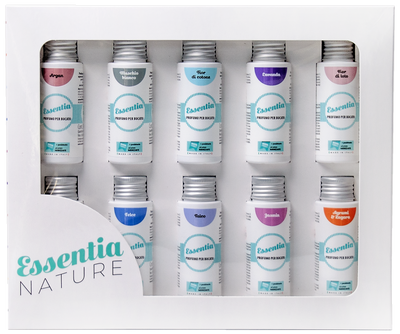
If fragrance is the finishing touch you want, Love for Laundry’s usage guidance is 5–10 ml in the fabric softener compartment, with detergent used separately according to its own instructions. Check fabric suitability and your bottle before use; if its dose differs, contact us to clarify. Laundry perfume is not a treatment for hard towels. Our laundry perfume and fabric softener guide explains the distinction.
A useful checklist for the next towel wash
- Read the towel’s washing and drying labels.
- Check water hardness and measure the correct detergent dose.
- Stay within the selected programme’s load limit.
- Note any conditioner used and follow the towel maker’s advice.
- Compare the result only after the towels are fully dry.
Questions you might still have
Does a stiff towel mean it is dirty?
No. Texture alone cannot tell you how well a towel has been cleaned. Consider the wash routine, visible soiling and any persistent odour separately.
Will laundry perfume soften my towels?
It adds fragrance; do not expect it to perform the conditioning job of fabric softener or correct a dosing problem.
Should I try a homemade stripping recipe?
Start with the towel label, detergent instructions and appliance guidance. A mixture found online is not a substitute for checking which treatment your fabric permits.
For your next load, choose one check from the list and note the result. If drying is the sticking point, our guide to drying laundry indoors is the next useful read.
Written by Love for Laundry. Sources checked on 23 October 2026.


Leave a comment